Ladybug Wreath: A Fresh, Friendly Floral Embroidery Design
First Impressions: Cheerful, Balanced, and Instantly Recognizable
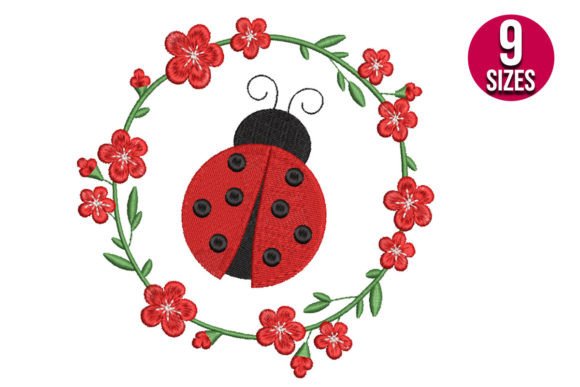
When I opened Ladybug Wreath for the first time, I didn’t just see a floral wreath—I saw a mood. It’s bright without being loud, detailed without feeling fussy, and whimsical without tipping into cutesy overload. The ladybug anchors the composition with quiet confidence, nestled among soft petals and gentle leaves that curve naturally around a circular frame. There’s no forced symmetry—just organic flow, like something hand-drawn and then thoughtfully digitized. As a designer who regularly selects embroidery files for client projects and small-batch production, I immediately knew this wasn’t just another spring-themed filler design. It carries personality—and that matters when you’re stitching something meant to be seen, gifted, or sold.
A Real-World Test: Stitching Ladybug Wreath on a Linen-Cotton Tea Towel
Last week, I used Ladybug Wreath to embroider a set of kitchen towels for a local boutique’s Mother’s Day collection. The fabric was medium-weight linen-cotton blend—textured but stable—and I chose a 5x7 hoop. The result? Clean satin-stitched petals, crisp running-stitch stems, and a ladybug whose glossy red fill held up beautifully against natural fabric variation. Customers loved how the design “felt handmade but looked polished.” That’s the sweet spot: Ladybug Wreath doesn’t hide behind density or flash; it earns attention through charm and clarity. It also scaled well across three towel sizes—centered on standard 18x28” linens, subtly offset on smaller 12x12” guest towels, and enlarged (with minor digitizing tweaks) for a large apron pocket.
Where Ladybug Wreath Shines—and Where It Needs Thought
Ladybug Wreath is especially strong for custom apparel on structured fabrics: think sweatshirt pockets, tote bag flaps, or baby onesie chest panels. Its circular shape frames well on curved surfaces like caps, and the moderate stitch density means it lies flat without stiffening lightweight knits. As an embroidered patch, it translates cleanly—no tiny gaps between elements, no thread nesting in corners. For personalized gifts, it pairs effortlessly with monograms or short names (e.g., “Emma’s Garden” stitched below the wreath), since its open center invites subtle layering.
That said, I’d avoid using Ladybug Wreath on ultra-thin fabrics like voile or stretchy jersey without testing. The fill stitches in the ladybug’s back and flower centers are rich enough to risk shadowing or puckering if stabilizer isn’t matched precisely. On dark fabric, I recommend checking thread colors early—especially the green stems and white petal highlights—to ensure contrast stays friendly, not washed out. And while it works beautifully on tea towels and pillow covers, I wouldn’t push it onto heavily textured bouclé or nubby wool blankets without adjusting underlay or reducing density manually.
Design Integrity Meets Commercial Practicality
What makes Ladybug Wreath stand out among Floral Wreaths isn’t just prettiness—it’s design discipline. The spacing between elements gives breathing room for thread movement during stitching. No overlapping satin columns. No micro-details that vanish at 3-inch width. That directly impacts customer trust: when a buyer sees a finished product online and receives something that matches the mockup—crisp, balanced, true to color—they’re more likely to reorder or tag your shop. For Etsy sellers and craft business owners, that consistency builds brand credibility faster than any banner ad.
I’ve used Ladybug Wreath in printable mockups for social media listings, and it holds up remarkably well in grayscale previews—proof that its value isn’t tied to color alone. That’s vital for digital embroidery file sellers: buyers can assess structure, scale, and balance before purchasing, reducing support requests and returns.
Practical Designer Notes Before You Stitch
- Always test first: Run Ladybug Wreath on scrap fabric matching your final project’s weight, weave, and stretch—even if it’s just a 2x2 swatch.
- Stabilizer matters: Medium-cutaway works best for knits; tear-away suffices for stable wovens like cotton duck or linen. Skip fusible unless you’re layering on heat-sensitive synthetics.
- Check the hoop size: Confirm the design fits comfortably within your machine’s maximum hoop dimensions—not just technically, but with ¼” clearance on all sides.
- Review stitch density: If using on delicate baby embroidery or lightweight summer tees, consider lightening fill areas slightly in editing software—especially the ladybug’s shell and largest flower centers.
- Verify licensing: Since Ladybug Wreath is marketed as a machine embroidery design for personal and commercial use, double-check the seller’s terms before selling finished items or bundling it into digital product kits.
- Mock it both ways: Preview Ladybug Wreath in black-and-white and on both light and dark backgrounds. Does the ladybug still read clearly? Do the stems retain definition?
Final Thought: A Design That Sells Itself—When Used With Intention
Ladybug Wreath won’t shout from a crowded craft fair table—but it will make people pause, smile, and pick up the item to feel the stitching. That’s the power of thoughtful design: it supports the product instead of competing with it. Whether you’re embroidering a holiday gift, building a boutique’s signature line, or expanding your portfolio of digital embroidery file offerings, Ladybug Wreath delivers reliable charm, professional execution, and quiet versatility. It’s not flashy. It’s not trendy in a fleeting way. It’s simply, refreshingly well-made—and that’s exactly what handmade product makers, Etsy sellers, and creative entrepreneurs need in their design assets.