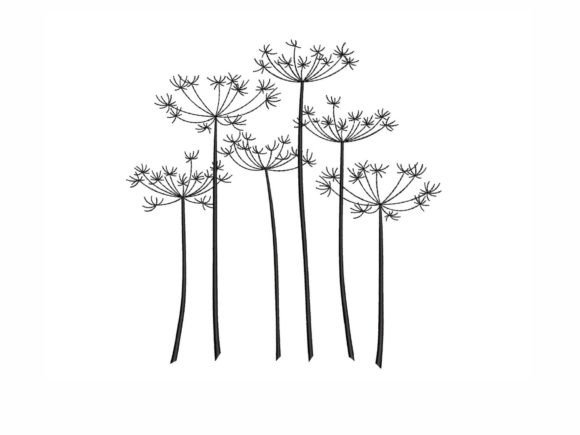
Cow Parsley: A Delicate Floral Embroidery Design
First Impression: Soft, Rustic, and Quietly Elegant
As an embroidery designer who’s prepped over 200 craft fair booths in the past decade, my first thought on seeing Cow Parsley wasn’t “bold” or “trendy”—it was “calm confidence.” This isn’t a shout-from-the-aisle design. It’s the kind that makes shoppers pause mid-stride, tilt their head, and lean in. Cow Parsley reads as softly rustic—think English cottage gardens, linen tea towels folded just so, and handmade aprons with subtle botanical charm. It leans into the Floral category without leaning too hard: no oversized petals, no cartoonish stems, no forced whimsy. That restraint is its biggest strength for handmade product appeal.
Where Cow Parsley Shines in Your Craft Fair Lineup
At a bustling market, visual hierarchy matters more than perfection. Cow Parsley works best where delicacy reads as intention—not limitation. Here’s where it lands strongest:
- Tote bag design: Centered on natural canvas or oat-colored linen, Cow Parsley becomes a quiet signature—not loud, but unmistakably handcrafted. Avoid black or charcoal totes; contrast fades and softens detail.
- Apron embroidery: Perfect above the pocket or subtly along the bib edge. Its airy stem-and-foliage rhythm complements the functional shape of an apron without competing.
- Tea towel embroidery: On medium-weight cotton or linen-blend towels, Cow Parsley breathes. The open negative space between stems photographs beautifully for Etsy listings—and customers love how it feels like “a garden caught mid-breeze.”
- Embroidered patch: At 3–4 inches wide, Cow Parsley holds clarity. Use it on denim jackets, tote straps, or kid-sized backpacks. It’s feminine without being fussy—ideal for cross-generational appeal.
- Pillow cover & small pouch: As a focal point on a 16" square pillow or a 5"x7" drawstring pouch, Cow Parsley elevates perceived value instantly. Buyers associate this level of botanical precision with care—and they pay for that feeling.
What Holds It Back (And How to Work Around It)
Cow Parsley isn’t plug-and-play on every surface. Its charm lives in fine lines and airy spacing—so dense stitch areas or tiny leaf tips can vanish if misapplied. Here’s what I watch for:
- Curved cap surfaces: Avoid full-front placement. Instead, use Cow Parsley as a clean side-embroidery motif—smaller scale, tighter hoop size, lightweight stabilizer.
- Textured towels: Terry cloth swallows delicate stems. Stick to smooth-weave flour sack or waffle-knit towels—or enlarge the design by 10–15% and reduce stitch density slightly.
- Dark fabric: On navy, charcoal, or deep olive, opt for ecru, oat, or pale sage thread colors—not stark white. Test contrast on scrap first; what looks crisp on screen often blurs in person.
- Small sizes: Below 2.5", leaf separation blurs and stems merge. Reserve Cow Parsley for medium-to-large applications unless you’re using it as part of a grouped motif (e.g., three small sprigs across a tea towel hem).
Real Booth Impact: Attention, Value, and Repeat Appeal
In my last spring market, I displayed Cow Parsley across six product types: a cream linen apron, a set of two embroidered tea towels, a canvas tote, a patch sampler board, a 12" pillow cover, and a framed 5"x7" hoop art piece. Customers consistently touched the apron and pillow first—then asked, “Is that real cow parsley? Is it native?” That curiosity is gold. Cow Parsley doesn’t scream “buy me”—it invites conversation, which builds trust. It also reinforces brand consistency: if your shop leans into slow-made, nature-rooted, tactile goods, Cow Parsley acts like a quiet anchor. It doesn’t date quickly, supports seasonal rotations (add dried lavender sprigs beside it in fall; cherry blossoms in spring), and photographs with soft authenticity—no heavy filters needed for your printable mockup or Instagram carousel.
Production Notes Every Embroidery Designer Should Run
Before cutting your first stabilizer sheet, run these checks:
- Test on scrap fabric—same weight, same dye lot, same finish as your final product.
- Review thread colors in natural light. Cow Parsley thrives in tonal palettes: oat, sage, stone, heather—not neon or high-contrast combos.
- Confirm hoop size and stitch density. If your machine embroidery design includes tight clusters or fine veining, verify it’s optimized for your machine’s speed and tension range.
- Match stabilizer to fabric texture. Tear-away for smooth cottons; cut-away + topping for knits or textured weaves.
- Create one real mockup before batch production—even if it’s just one tea towel. See how the stem flow reads at arm’s length. Does it look handmade or machine-perfect? Aim for the former.
- Compare fabric colors side-by-side. A single shade shift (e.g., oat vs. ivory) changes how the design rests on the surface.
- Verify commercial licensing. Since Cow Parsley is marketed for commercial embroidery, confirm your digital embroidery file includes rights for finished goods—especially if you sell via Etsy or wholesale.
Final Thought: Cow Parsley Isn’t Just a Design—It’s a Vibe Anchor
For Etsy sellers, small shop product creators, and boutique makers building a recognizable aesthetic, Cow Parsley delivers more than botanical prettiness. It signals intentionality. It slows the scroll. It pairs seamlessly with neutral palettes, natural fibers, and quiet branding. It’s not the flashiest craft fair product in your lineup—but it’s often the one that sells out first because it feels *true*. In a world of oversaturated motifs, Cow Parsley reminds buyers—and makers—that sometimes the most memorable handmade moments are the softest ones.