Cut Work Border for Home Decor
A Thoughtful First Impression
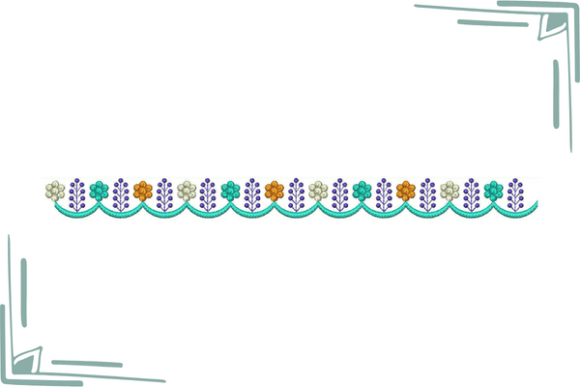
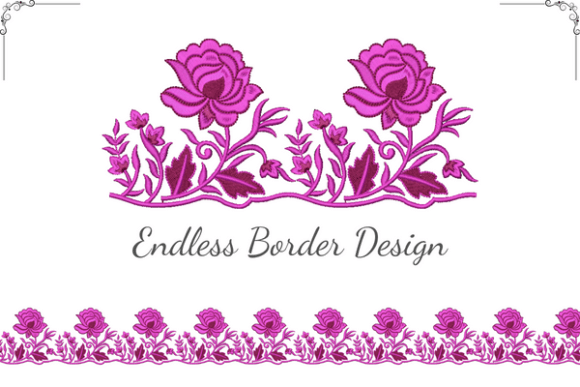
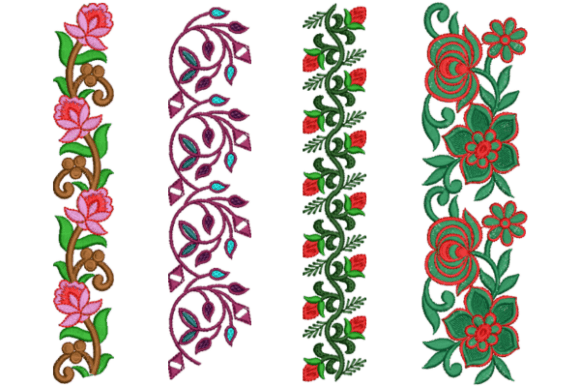
When I first opened Cut Work Border for Home Decor, I wasn’t just scanning for pretty flowers—I was asking: *Will this hold up on a customer’s linen pillow cover? Does it translate well on a curved cap brim? Can it survive repeated washing on a kitchen towel?* Visually, it delivers soft, organic charm—layered petals, delicate stems, and subtle cut-work accents that suggest hand-stitched artistry without demanding handwork. The design breathes. It doesn’t shout; it invites. That’s rare in machine embroidery borders, where density often overrides delicacy. This one leans into negative space and satin-stitch definition rather than heavy fill stitch—making it feel more like heirloom embellishment than mass-produced trim.
Where It Naturally Fits (and Where It Doesn’t)
Cut Work Border for Home Decor thrives where elegance meets everyday use: pillow covers, baby blanket hems, apron pockets, and nursery wall hangings. Its floral rhythm reads beautifully along straight or gently curved edges—ideal for towel ends, tote bag flaps, or the collar band of a lightweight sweatshirt. It’s not built for tight corners or aggressive stretch fabrics like jersey knits without thoughtful stabilization. On caps, I’d reserve it for flat front panels—not the curved crown—unless paired with a low-profile stabilizer and reduced stitch density in testing.
It’s also not an appliqué design. There’s no base fabric layer to cut away—just refined machine embroidery stitches: satin for outlines and petals, light fill for centers, and occasional running stitch for vine-like movement. That means no extra trimming steps, but also no dimensional texture unless you add it manually with thread choices or topping.
Real-World Performance Notes
- Tote bags & aprons: Works cleanly on medium-weight canvas and cotton duck when hooped with medium tear-away + light cut-away backing. Avoids puckering better than denser borders because stitch density stays moderate.
- Baby items & nursery decor: Soft enough for organic cotton blankets and muslin swaddles—but always test on scrap first. Gentle stitch count helps preserve fabric drape and comfort.
- Kitchen towels & tea towels: Holds up well after multiple washes when stitched with polyester thread and stabilized with a light fusible mesh. The open areas resist lint buildup better than fully filled motifs.
- Sweatshirts & custom apparel: Best on structured fleece or midweight cotton blends—not ultra-soft, brushed interiors. Use a topping (like water-soluble film) to prevent thread sinking into nap.
- Patches & embroidered patches: Not designed as a standalone patch file, but can be stitched onto twill or felt, then cut out with a 1/8" seam allowance. Reinforce edges with zigzag or fray-check if selling as iron-ons.
What It Adds to Your Handmade Product
Using Cut Work Border for Home Decor elevates perceived value—not through flash, but through intentionality. Customers notice the quiet confidence of balanced spacing, clean satin edges, and cohesive flow. On Etsy listings, it enhances product photography: the border frames your item without competing for attention. For boutique merchandise or craft fair displays, it reinforces brand consistency when used across pillow + towel + apron collections—even with varied thread palettes.
As a personalized gift accent, it adds warmth and care. A monogrammed baby blanket edged with this border feels curated, not generic. And because it’s inherently versatile—not seasonal or trend-locked—it supports long-term design assets without needing constant refresh.
Practical Embroidery Considerations
Before stitching your first Cut Work Border for Home Decor piece, do these five things:
- Test on scrap fabric *identical* to your project—especially for dark fabrics. Some lighter thread colors may need doubling or metallic alternatives for contrast.
- Check hoop size compatibility. Borders like this often require at least a 5" x 7" hoop for full layout. Smaller hoops mean re-hooping and potential alignment gaps—so verify before committing to production runs.
- Review stitch density visually in your embroidery software. If it looks overly compact in petal clusters, consider reducing density by 5–10% for breathable fabrics like linen or rayon blends.
- Use appropriate stabilizer: tear-away for stable wovens, cut-away for knits or high-wash items, and fusible for lightweight silks or voiles. Skip heavy stabilizers—they mute the cut-work effect.
- Inspect small details post-stitching: stem tips, petal points, and inner cut-work lines. Trim stray threads carefully—especially near satin-stitch edges—to preserve crispness.
Final Thoughts for Creative Entrepreneurs
Cut Work Border for Home Decor isn’t a “plug-and-play” border for every project—but that’s its strength. It asks you to slow down, choose thoughtfully, and match intention to material. For Etsy sellers building signature collections, it’s a quiet differentiator. For commercial embroidery shops, it’s a reliable go-to for upscale home goods clients who value subtlety over saturation. And for crafters launching handmade shops, it bridges skill and sophistication without requiring advanced digitizing knowledge.
Just remember: this is a digital embroidery file, not magic. Its success lives in your prep—your stabilizer choice, your thread selection, your test run. Review the licensing terms on the Creative Fabrica product page before selling finished items. Confirm whether personal, small business, or commercial use is permitted. And always treat your first stitch as a conversation—not with the machine, but with the person who’ll hold that pillow, wrap that baby, or dry their hands on that towel.
That’s where Cut Work Border for Home Decor earns its place—not as decoration, but as quiet craftsmanship, translated through thread.