Mylar Monkeys: Sparkle Without the Stress
First Impressions: Sweet, Playful, and Surprisingly Sophisticated
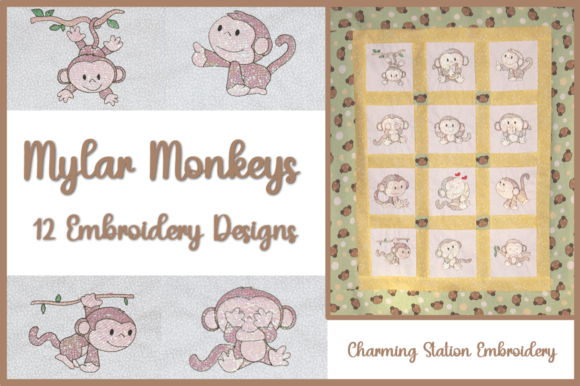
As an embroidery designer who’s tested hundreds of digital embroidery files for baby products and personalized gifts, I opened Mylar Monkeys expecting charm—and got delight. These 12 little monkeys radiate gentle whimsy: rounded limbs, soft facial expressions, and just enough detail to feel intentional—not cartoonish, not overly fussy. They land squarely in that rare sweet spot between playful and timeless. No seasonal clichés, no trendy gimmicks—just warm, handmade energy with a subtle shimmer. That’s the Mylar magic: it catches light like tiny sunbeams without demanding metallic thread tension adjustments or frequent needle changes. For a baby embroidery collection or a wedding gift line, this tone builds instant emotional connection. Customers don’t just see “monkeys”—they see joy, tenderness, and care stitched right in.
Where Mylar Monkeys Shine (and Where They Need Gentle Handling)
This set is exceptionally versatile across personalized gift categories—but smart placement matters. On a soft cotton baby quilt or nap mat? Absolutely perfect. The Mylar reflects softly against pale fabrics, and the stitch density feels balanced—not too heavy for delicate batting, not too sparse to lose definition. For embroidered towels, pillow covers, or nursery wall hangings, the sparkle lifts the design without overwhelming texture. And on a linen apron or canvas tote bag? It adds quiet luxury—ideal for Etsy sellers curating thoughtful, giftable handmade products.
That said, Mylar Monkeys isn’t ideal for every surface. Avoid tight curves (like mug sleeves or narrow collar bands) where Mylar film may lift or crease unpredictably. Skip stretchy baby onesies unless you’re using ultra-lightweight stabilizer and testing extensively—Mylar doesn’t forgive fabric movement. Thick terry cloth towels? Yes—but double up your cutaway stabilizer and reduce stitch density slightly to prevent puckering. Dark fabric? Test contrast first: some Mylar shades read beautifully on navy or charcoal; others fade. Always run a printable mockup on both light and dark grounds before committing to a batch.
Real-World Use Cases for Small Shops & Gift Makers
- Baby embroidery: Stitch one centered on a muslin swaddle or along the hem of a crib sheet—soft, meaningful, and photo-ready.
- Wedding gift: Embroider a pair onto a linen handkerchief or monogrammed guest book cover. The shimmer reads as heirloom-quality, not flashy.
- Nursery decor: Group three or four on a framed hoop or custom blanket embroidery—Mylar catches window light beautifully in a sunlit room.
- Etsy seller staple: Offer Mylar Monkeys as a customizable add-on for towel sets, pillow covers, or baby milestone blankets. Buyers love “sparkle upgrades” that feel special but aren’t priced like heirlooms.
- Craft fair product: Pre-stitch samples on neutral linen pouches or cotton napkins—people reach out to touch the Mylar. That tactile moment builds trust faster than any description.
What This Design Says to Your Customer (Before They Even Read the Label)
Mylar Monkeys quietly communicates value. Not through price tags—but through perceived craftsmanship. That subtle gleam tells buyers: “This wasn’t mass-produced. Someone chose this detail. Someone cared about how it catches light.” For small shop owners and handmade sellers, that translates directly to higher cart conversion and repeat orders. In product photography, Mylar Monkeys performs brilliantly—no extra lighting needed. A simple overhead shot on textured linen shows depth and dimension that flat thread can’t match. And emotionally? Parents buying baby embroidery connect with the gentleness; couples choosing wedding gifts respond to the quiet elegance. It’s not loud—it’s memorable.
Practical Embroidery Notes Every Maker Should Follow
Even the best machine embroidery design needs thoughtful execution. Before stitching Mylar Monkeys for customer orders:
- Always test on scrap fabric matching your final product’s weight and weave—especially for embroidered towels or stretchy baby clothes.
- Check thread color contrast: Mylar reflects light, but surrounding stitches must support readability. Light thread on dark fabric? Verify legibility after stitching.
- Confirm hoop size compatibility—some monkey poses may require larger hoops. Don’t assume all 12 fit your standard setup.
- Review stitch density: Mylar handles moderate density well, but avoid overloading small features like ears or tails. If details look muddy in simulation, simplify or re-hoop.
- Use appropriate stabilizer: Cutaway for knits and towels, tear-away for stable wovens. Mylar adheres best when stabilizer lies perfectly flat.
- Compare light/dark fabric mockups side-by-side—Mylar behavior shifts noticeably depending on base color.
- Inspect small details post-stitch: Mylar edges should lie smooth, not curl. If they do, adjust hooping tension or try a lighter-weight Mylar film next time.
- Verify commercial licensing: Since Mylar Monkeys is intended for personalized gift products and small shop use, confirm your license permits finished product sales before listing on Etsy or wholesale channels.
Final Thought: A Design That Grows With Your Business
Mylar Monkeys isn’t just another baby animal embroidery file—it’s a strategic asset. It bridges playfulness and polish, making it equally at home on a $35 custom tote bag and a $249 heirloom blanket. For embroidery makers building a reputation for quality, for gift shop owners seeking standout exclusives, and for Etsy sellers tired of competing on price alone—this set delivers emotional resonance *and* technical ease. It reminds customers why they choose handmade: because something small, joyful, and thoughtfully made can still make their heart skip. Just remember—the sparkle isn’t in the Mylar alone. It’s in the care you bring to every stitch, every fabric choice, every personalized gift you send into the world.