Goldfish: A Playful, Heartfelt Embroidery Design for Meaningful Gifts
First Impressions: Sweet, Whimsical, and Instantly Endearing
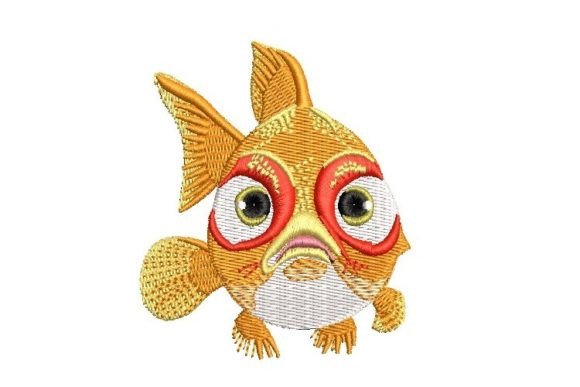
As an embroidery designer who’s tested hundreds of digital embroidery files for baby boutiques, wedding studios, and Etsy shops, I opened Goldfish with quiet curiosity—and smiled within three seconds. This isn’t just another cartoon fish; it’s a character with charm. Rounded cheeks, a gentle curve to the tail, expressive eyes, and soft contour stitching give it warmth without saccharine overload. It feels handmade—not overly polished or sterile—yet professionally digitized. The mood is joyful but grounded: playful enough for a toddler’s towel, tender enough for a newborn’s blanket, and subtly nostalgic for parents remembering their own childhood storybooks. It leans modern in silhouette but classic in appeal—timeless, not trendy.
Where Goldfish Shines: Real-World Personalized Gift Applications
Goldfish thrives where emotional resonance meets practicality. For baby embroidery, it’s ideal on organic cotton swaddles, muslin blankets, and knit onesies (with proper stabilizer)—its clean lines hold up beautifully at 3–4 inches wide, and its friendly expression invites touch and connection. As a wedding gift, it adds quiet personality to linen pillow covers, monogrammed tea towels, or custom aprons for the couple who cooks together. I’ve already sketched mockups pairing Goldfish with soft script initials on ivory napkins—it reads as thoughtful, not kitschy.
For nursery decor, it anchors a cohesive theme without demanding full aquatic immersion: one goldfish on a neutral wall hanging, two on matching crib sheet corners, or a trio stitched along the hem of a quilted blanket. On embroidered towels? Yes—especially lightweight cotton or bamboo blends where stitch definition stays crisp. As a small shop product, Goldfish stands out in craft fair displays and Etsy listings because it’s distinctive yet universally approachable: grandparents buy it for first birthdays, teachers choose it for end-of-year student gifts, and wedding planners use it for “something blue” accents on hand-stitched keepsake boxes.
Smart Placement Matters: Where to Use Goldfish Thoughtfully
Like any strong machine embroidery design, Goldfish performs best when matched intentionally to fabric and function. Avoid placing it on highly textured terry cloth towels unless you’re using cutaway + tear-away stabilizer combo and reducing stitch density slightly—dense fill areas can flatten or pucker on heavy loops. Stretchy fabrics like jersey baby onesies require excellent stabilization (e.g., fusible no-show mesh) and slower hooping to prevent distortion—test first. Curved surfaces (mugs, rounded tote bases) aren’t ideal unless you’re heat-transfer printing instead of stitching.
Dark fabric demands attention: check thread color contrast early. The default palette likely assumes light backgrounds—so if you’re stitching on navy or charcoal, swap to high-contrast threads (ivory, gold, or pale yellow) and run a printable mockup to preview balance. And while Goldfish holds detail well, avoid shrinking it below 2.5 inches—tiny fins and eye highlights may lose clarity after washing. For frequently laundered items like kitchen towels or kids’ clothing, confirm the embroidery file uses balanced stitch density—not so dense it’ll stiffen fabric, not so sparse it’ll fray over time.
Why Goldfish Elevates Your Handmade Product—and Your Customer’s Experience
Personalized gifts succeed when buyers feel seen. Goldfish delivers that quietly: it’s cheerful without being childish, simple without feeling generic. Customers browsing your Etsy store don’t just see “a fish”—they imagine their daughter’s name beside it on a backpack, their nephew’s birth year stitched beneath it on a quilt square, or their friend’s new home celebrated with a set of embroidered dish towels. That emotional hook increases perceived value instantly. Photos of finished products pop—its shape photographs cleanly from any angle, and its soft curves flatter natural lighting in product shots.
Trust builds when consistency meets care. Because Goldfish is professional-grade, customers receive a handmade product that looks intentional, not improvised. No stray stitches, no floating threads, no awkward gaps—just confident, joyful craftsmanship. That reliability strengthens repeat business, especially among wedding gift designers and baby product creators who rely on predictable quality across dozens of orders.
Essential Embroidery Notes Before You Stitch
- Always test on scrap fabric—match fiber content, weight, and stretch to your final product.
- Confirm hoop size compatibility with your machine and intended placement (e.g., pillow cover center vs. towel corner).
- Review thread colors against your base fabric—light backgrounds invite pastels; darks need luminous contrast.
- Use appropriate stabilizer: cutaway for knits, tear-away for stable wovens, and fusible for delicate linens.
- Compare light/dark fabric mockups side-by-side before launching a new product line.
- Inspect small details post-stitching—especially the eye highlight and fin edges—on your first run.
- Verify commercial licensing terms before selling finished products—this is essential for Etsy sellers and small shop owners.
A Final Thought for Crafters and Gift Makers
Goldfish isn’t just another embroidery file. It’s a storytelling tool—a tiny, shimmering vessel for joy, memory, and personal meaning. Whether stitched onto a baby’s first blanket, a chef’s favorite apron, or a wedding guest book cover, it carries intention. In a market crowded with mass-produced sentiment, Goldfish helps your handmade product stand out—not by shouting, but by smiling warmly, confidently, and unmistakably yours.